

The Hidden Costs of Untrained Aircraft Detailing: Damage, Downtime and Liability
A cheap, untrained detail can become the most expensive job on an aircraft. Here is where the real costs come from, and how proper training prevents them.
Why untrained detailing costs more than it saves
The price of a detail is small next to the value of the aircraft it is performed on. When an untrained detailer gets it wrong, the bill is rarely the cost of redoing the job. It is the cost of repairs, inspections, lost flying days and, sometimes, a dispute over who pays.
Damage to surfaces that are expensive to repair
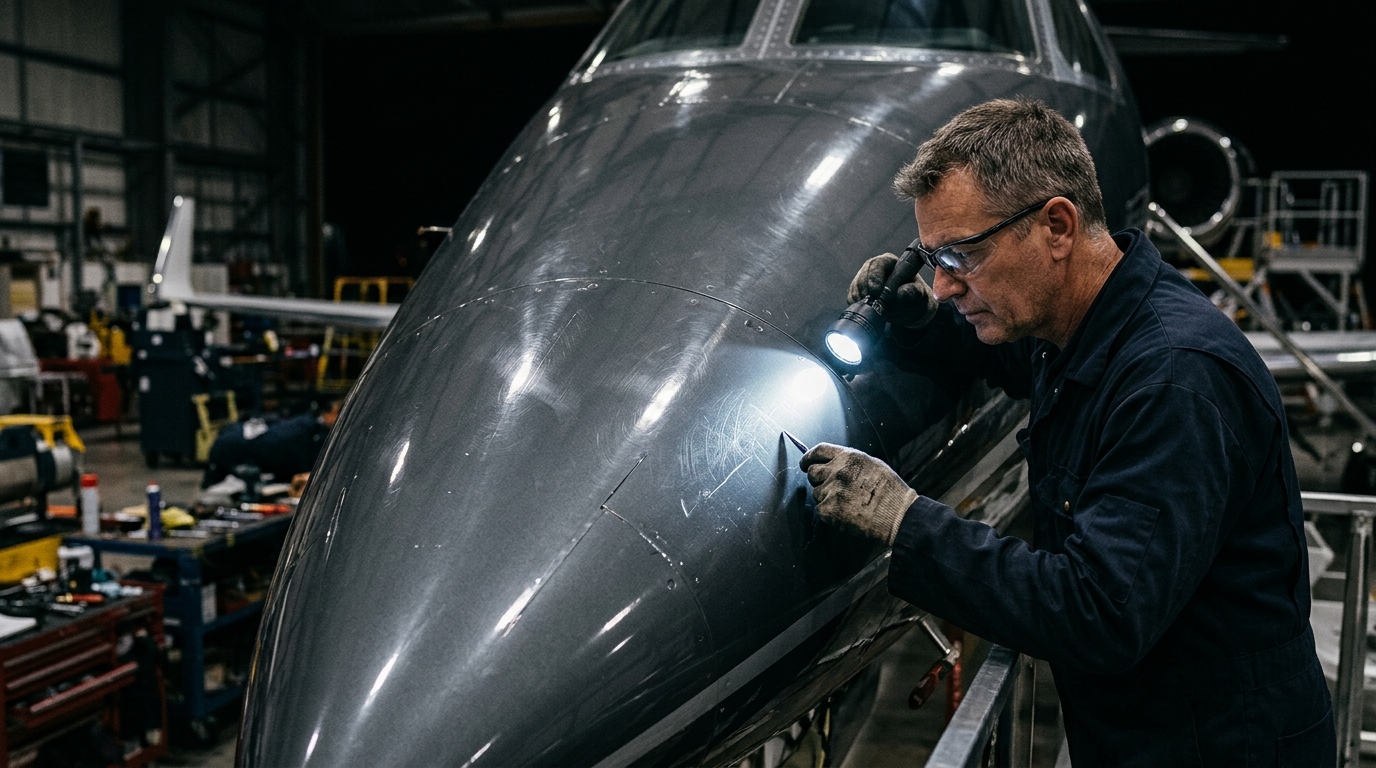
Aircraft windows, paint systems, polished leading edges and cabin finishes are specified by the manufacturer for a reason. Using the wrong product, pad or pressure can cause crazing on windows, dulled or swirled paint, stained veneer or damaged leather. Many of these repairs require specialist contractors and parts with long lead times.
Downtime: the cost operators feel most
If a detailer disturbs a sensor, contaminates a port or damages a seal, the aircraft may need to be inspected by an engineer before it can fly. For a charter operator or a business jet owner, a grounded aircraft means cancelled trips, repositioning costs and unhappy passengers. One lost day can cost more than a year of detailing.
Liability and insurance
When damage happens, the question quickly becomes who is responsible. Operators and insurers increasingly ask what training a detailer holds and whether they followed OEM-approved methods. A detailer without recognised aviation training is in a weak position, and so is the business that hired them.
How proper training prevents these costs
Aviation detailing training teaches detailers to recognise high-risk areas, choose compliant products, and follow the procedures the manufacturer intends. It also teaches when to stop and ask an engineer. Hawkers Aviation's team brings over 12 years of aviation detailing experience at the UK's busiest airports to training programmes across the UK, Europe and the Middle East. Our training is delivered by detailers with hands-on experience in private jet detailing and training, using OEM-approved methods.
How one mistake turns into many costs
• Repairing or replacing the damaged part, often with long lead times from the manufacturer • An engineering inspection before the aircraft is released to fly • Lost charter revenue or cancelled owner trips while the aircraft is on the ground • Repositioning a replacement aircraft for passengers • Time spent on insurance claims and disputes • Damage to the operator's reputation with owners and clients
Questions to ask before anyone details your aircraft
What aviation-specific training does the detailer hold? Do they follow OEM-approved methods for your aircraft type? Do they know which areas must not be touched, and when to stop and call an engineer? Are they insured for work on aircraft? A properly trained detailer will answer all of these without hesitation.
FAQ
Frequently asked questions
- What is the most common damage caused by untrained aircraft detailers?
- Scratched or crazed windows, damaged paint and finishes, and disturbed sensors or seals are among the issues operators most often report.
- Is aircraft detailing training worth it for a small team?
- Yes. Avoiding a single damage incident or a day of downtime typically pays for training many times over.
- Who pays when a detailer damages an aircraft?
- It depends on the contracts and insurance in place, but a detailer without recognised aviation training, or who did not follow OEM-approved methods, is in a weak position if a claim is made.
- Where are Hawkers Aviation's training sessions held?
- Our head office is in Sevenoaks, Kent, and our training sessions run at partner facilities across UK airports, so trainees learn in a real aviation environment, on the ramp and in the hangar.