

Aircraft Detailing Training: The Complete Guide to Courses, Standards and Certification
What aircraft detailing training covers, why it differs from automotive courses, and how to choose an aviation detailing course in the UK, Europe or the Middle East.
What is aircraft detailing training?
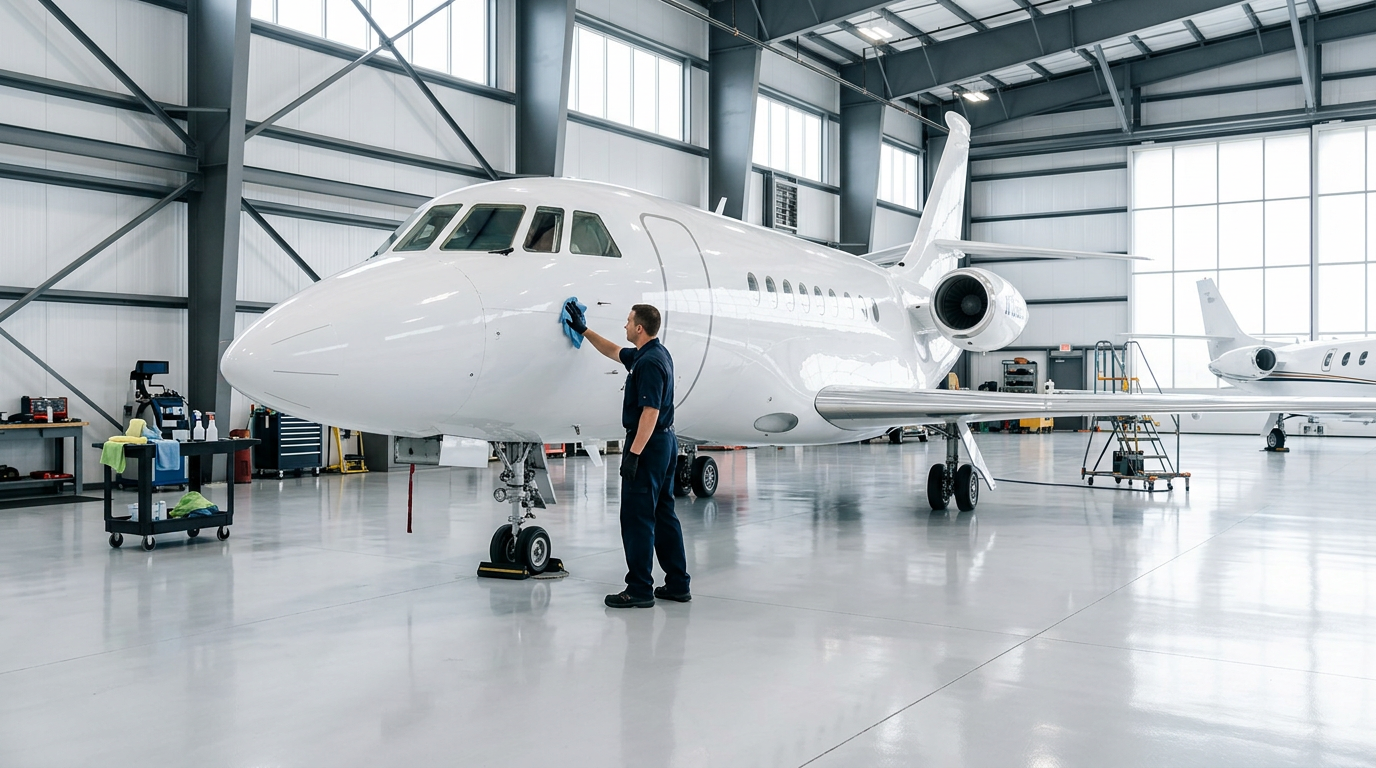
Aircraft detailing training teaches technicians how to clean, protect and present the exterior and interior of an aircraft without damaging it, and in line with the methods approved by the aircraft manufacturer (OEM). It covers far more than appearance: it covers the materials an aircraft is built from, the areas that must never be touched with the wrong product, and the safety procedures that apply on the ramp and in the hangar.
Hawkers Aviation's team brings over 12 years of aviation detailing experience at the UK's busiest airports to training programmes across the UK, Europe and the Middle East. Our training is delivered by detailers with hands-on experience in private jet detailing and training, using OEM-approved methods.
Why aviation detailing needs its own training
An aircraft is not a large car. Its paint systems, composite panels, acrylic windows, sensors, seals and interior materials all have manufacturer requirements. A product or technique that is perfectly safe on a vehicle can etch a window, lift sealant, contaminate a static port or void a warranty on an aircraft. The consequences are also different. A mistake can ground an aircraft, trigger an inspection, or become a safety issue. That is why operators, MROs and FBOs increasingly expect detailing teams to hold recognised aviation-specific training.
What a proper aviation detailing course should cover
• Aircraft materials and the OEM-approved methods for each surface • Exterior care: paint, brightwork, de-icing boots, windows and sensitive areas • Interior care: leather, wood veneer, carpets, galleys and lavatories • Ramp and hangar safety, including working at height and around ground equipment • Product selection and compliance with manufacturer specifications • Documentation and quality standards expected by operators
Who should take aircraft detailing training?
Aviation detailing training is designed for new and existing detailers, in-house teams at operators and management companies, MRO and FBO staff, and detailing businesses moving into aviation from automotive or marine work. Experienced car detailers in particular benefit, because many of their habits need to be relearned for aircraft.
How to choose an aircraft detailing course
Look for training that is delivered by people who have detailed private and business jets themselves, that teaches OEM-approved methods rather than generic techniques, and that is backed by a recognised industry body. Ask whether training can be delivered at your own facility, on the aircraft types you actually operate.
What happens on a training day
Training combines classroom theory with supervised, hands-on work on real aircraft at our partner facilities across UK airports. Trainees learn to assess an aircraft before any work starts, identify restricted and sensitive areas, choose compliant products, and check and record their finished work to the standard operators expect. Groups are kept small, so every trainee gets direct time with an experienced aviation detailer.
What you can expect after training
Trainees leave with a clear understanding of how aviation detailing differs from other detailing, the confidence to work safely on the ramp and in the hangar, and a record of the training they have completed. Operators, FBOs and insurers increasingly ask to see that record before trusting someone with an aircraft.
FAQ
Frequently asked questions
- Is there an aircraft detailing course in the UK?
- Yes. Hawkers Aviation runs aviation detailing training for the UK, Europe and the Middle East, led by a team with over 12 years of experience at the UK's busiest airports. Our head office is in Sevenoaks, Kent, and our training sessions run at partner facilities across UK airports.
- Can I learn aircraft detailing from online videos?
- Videos can show what a finished aircraft looks like, but they cannot teach you to judge materials, products and risk on a real aircraft. Hands-on training from experienced aviation detailers is the safe route.
- Do you train teams at their own location?
- Talk to us about your fleet and facility, and we will advise on the right format for your team.
- Do I need previous detailing experience?
- No. Our training suits complete beginners as well as experienced automotive or marine detailers moving into aviation.